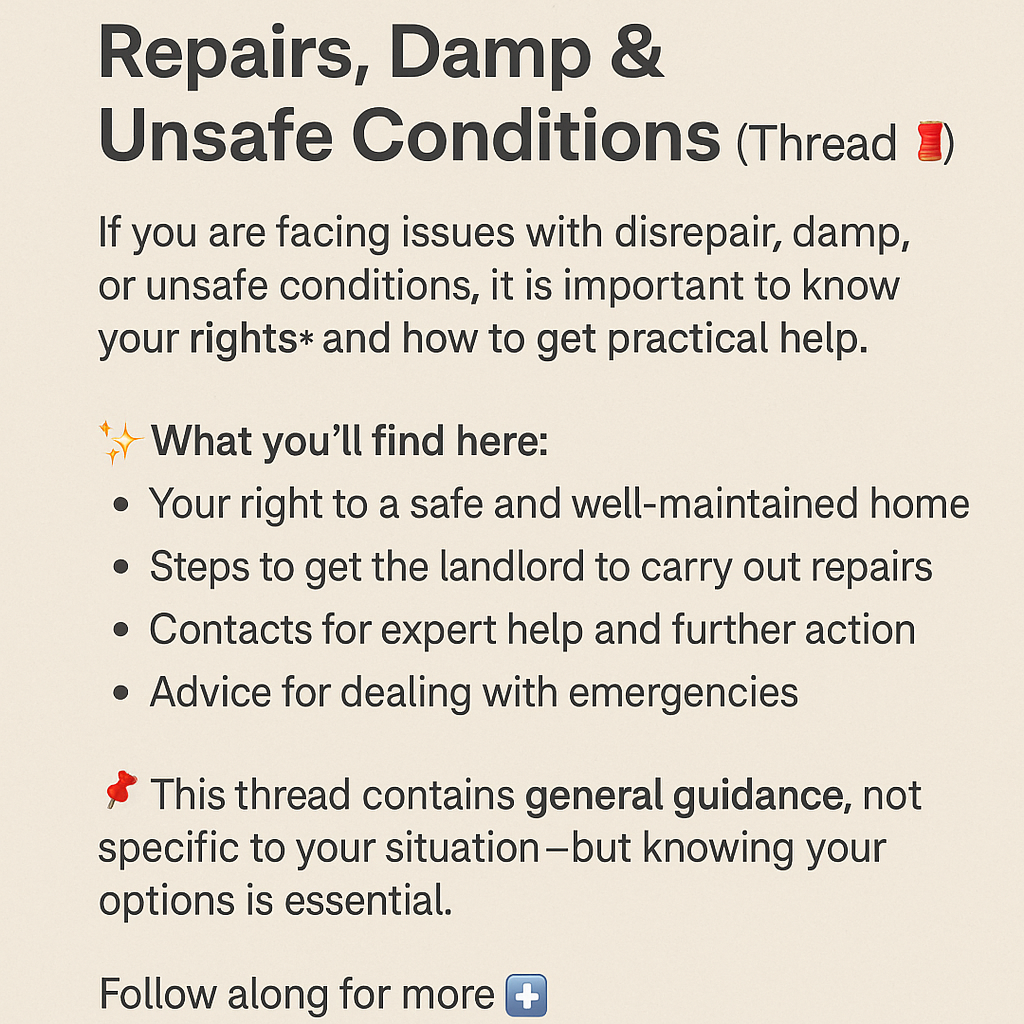

This thread is here to help anyone dealing with poor housing conditions—whether it’s damp, mould, broken heating, or unsafe structures. Knowing your rights and the steps you can take is essential.
🔎 Common Issues
• Damp & mould: Can affect health, especially for children, elderly, or those with respiratory conditions.
• Repairs not done: Landlords have a legal duty to keep properties safe and habitable.
• Unsafe conditions: Broken stairs, faulty wiring, gas leaks, or lack of heating are serious hazards.
⚖️ Your Rights
• Landlords must ensure homes are fit to live in under the Homes (Fitness for Human Habitation) Act 2018 (UK).
• Tenants can request repairs in writing—keep copies of all communication.
• If repairs aren’t carried out, you may be able to escalate to your local council’s Environmental Health team.
• You cannot be legally evicted just for asking for repairs (protection against “retaliatory eviction”).
🛠️ Practical Steps
1. Document everything: Take photos, keep notes, and save emails/texts.
2. Report issues in writing: Send a clear repair request to your landlord or letting agent.
3. Escalate if ignored: Contact your local council housing department or environmental health.
4. Seek advice: Organisations like Shelter, Citizens Advice, or local tenants’ unions can guide you.
🔎 Common Issues
• Damp & mould: Can affect health, especially for children, elderly, or those with respiratory conditions.
• Repairs not done: Landlords have a legal duty to keep properties safe and habitable.
• Unsafe conditions: Broken stairs, faulty wiring, gas leaks, or lack of heating are serious hazards.
⚖️ Your Rights
• Landlords must ensure homes are fit to live in under the Homes (Fitness for Human Habitation) Act 2018 (UK).
• Tenants can request repairs in writing—keep copies of all communication.
• If repairs aren’t carried out, you may be able to escalate to your local council’s Environmental Health team.
• You cannot be legally evicted just for asking for repairs (protection against “retaliatory eviction”).
🛠️ Practical Steps
1. Document everything: Take photos, keep notes, and save emails/texts.
2. Report issues in writing: Send a clear repair request to your landlord or letting agent.
3. Escalate if ignored: Contact your local council housing department or environmental health.
4. Seek advice: Organisations like Shelter, Citizens Advice, or local tenants’ unions can guide you.